
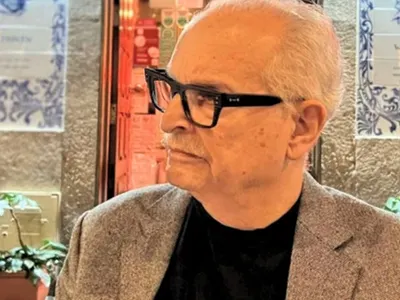
with commentary by Paul Guyer
I first encountered Paul Guyer's work in pure desperation. I was an undergraduate at USC, in a literary criticism seminar where each of us was assigned a text and required to deliver a mini-lecture on it. Mine was Immanuel Kant's Critique of Judgment. To be honest, I was only responsible for an excerpt, a few sections on the definition of art. But as I started reading, I realized there was no way to understand the excerpt, much less stand up and present it, without reading the whole book. So I went down into the underground stacks of Doheny Library, found a table tucked into a corner, and over a few days I did exactly that.
Which helped, for a time, until the next realization arrived: now I felt I needed the Critique of Pure Reason, and possibly the rest of Kant while I was at it. I had a handful of days. So I decamped to the philosophy section with what I now recognize as an over-idealistic, incredibly naive belief that somewhere on those shelves was a book holding the key to Kant, to the third Critique, and to my assignment. In the Kant section, deep underground, I found a volume on Kant by a man named Paul Guyer, and a book called Kant and the Claims of Taste. What I found in them wasn't a key. It was a door.
That distinction turned out to be the real lesson, more lasting than anything in my lecture. It was the first time I understood what philosophy is, and just as importantly, what it isn't. I had assumed there was an answer somewhere, a center, an end-point, and that a good enough scholar would hand it over. A door is a different thing. A door has a frame, which means it has limits; it opens in one direction, onto one room, and not onto every room at once. Guyer opened Kant that way for me: enough to walk through, enough not to make a fool of myself in class. I still went far over my allotted time, and in hindsight nobody needed my excursus on the competing translations of certain German words.
I recently dug up the paper. In it, twenty-two-year-old me quotes Kant's warning that even free art needs "a mechanism," a constraint, without which the spirit "would evaporate completely." I was closer than I knew. The frame is what lets the door open.
Guyer, it turns out, walked through a door like this himself. He has taught Kant for fifty years; he made the standard English editions most of us now read. And in the opening of his Rebind commentary he tells you how it started: a wire book rack in Penn Station, around 1963, and a paperback of David Hume's essays priced at forty-five cents. "Well, I had 45 cents, so I bought this book and started reading it on the train home, and it was totally fascinating."
He gave a class report on this philosopher who doubted our belief in causation; "the other students looked at me like I was crazy, the teacher looked at me like I was crazy." But the hook had set: Hume's conclusion was clearly wrong, and yet, "where was the problem in his arguments?" Eventually he discovered the philosopher who made it his life's aim to generalize Hume's problem and then resolve it. He closes his own story with a shrug: "That's all wisdom about me." The world's foremost living reader of Kant got in through an accident, a cheap paperback, and a class assignment. There is hope for the rest of us.
What he built from that accident is this commentary, and I want to be precise about its scale, because nothing else we've produced is quite like it. This is a walk through Kant's full philosophical output: the Enlightenment essay pried apart word by word; the Critique of Pure Reason argument by argument, from space and time to the categories to the famous illusions of pure reason; the Groundwork and its formulas tested against Kant's own examples; the shocking doctrine of radical evil; right, politics, and Toward Perpetual Peace; and the third Critique, the book that once held me hostage underground. It gains its depth the honest way: never by pulling back from the texts, only by going further into them.
And the rigor cuts both directions. Guyer grades Kant as he goes, devoting a whole episode to what he considers the weakest stretch of the first Critique, and pausing on the Groundwork's suicide example to say plainly where the argument fails. A guide who will tell you where Kant is wrong is a guide you can trust about where Kant is right.
Under the whole march runs a single thesis, and Guyer states it with the compression of someone who has spent half a century earning it. Kant, he tells us, put it this way in his lectures:
"Freedom is the end, reason is the means. Freedom is the thing of fundamental value, reason is what we use to realize that value." — Paul Guyer
Kant elsewhere calls freedom "the inner value of the world," and Guyer reads the entire critical philosophy as an architecture built to protect it: a system that secures our scientific knowledge of nature while limiting its reach, as he puts it, "in order to make room, above all, for the possibility of freedom." Science that cannot be wrong about nature; morality that no circumstance can excuse; and one strange, magnificent doctrine asked to hold up both. "That's a big ask," Guyer says, "but that's what he's trying to do." Once you have that thesis in hand, three dense books and a shelf of essays snap into a single project, and the march stops feeling like a slog and starts feeling like a survey of one enormous building.
The thesis reaches all the way down into my old assignment. Autonomy, Guyer shows, is Kant's word for freedom at every level, including the judgment of beauty: no proof, no expert, no formula can make an aesthetic judgment for you. "It has to really be your own judgment." He tells a story about walking a museum through room after room of competent imitators, the Goyistas, "copying Goya's manner, but there's no life to them. That's what Kant means by spirit, what it is that makes a work of art alive." Sitting with that episode, I finally heard what I'd been groping toward in that basement lecture two decades ago.
And I noticed something else: the commentary practices what it explains. Guyer never judges for you. He puts you in front of the arguments, in the position to experience them, and leaves the judgment where Kant says it has to live.
That's the promise here, and it's why the rigor and the welcome aren't in tension. The accessibility doesn't come from simplifying Kant; it comes from actually walking through him, at reading pace, with someone who knows every corridor. I did not become a Kant scholar. I learned my lesson in the bowels of Doheny Library, and I've stayed on my side of that particular door. But Guyer's work saved me once, when I needed it badly. I think it will save you too.
Kant's motto for enlightenment was two words of Latin: sapere aude, dare to know. Nobody is handing you a key, because there is no key. There's a door, with a frame, opening in a definite direction. Guyer holds it open for the whole length of the house.