
Video 12

The Episode That Got the Book Banned

Featuring Philip Kitcher
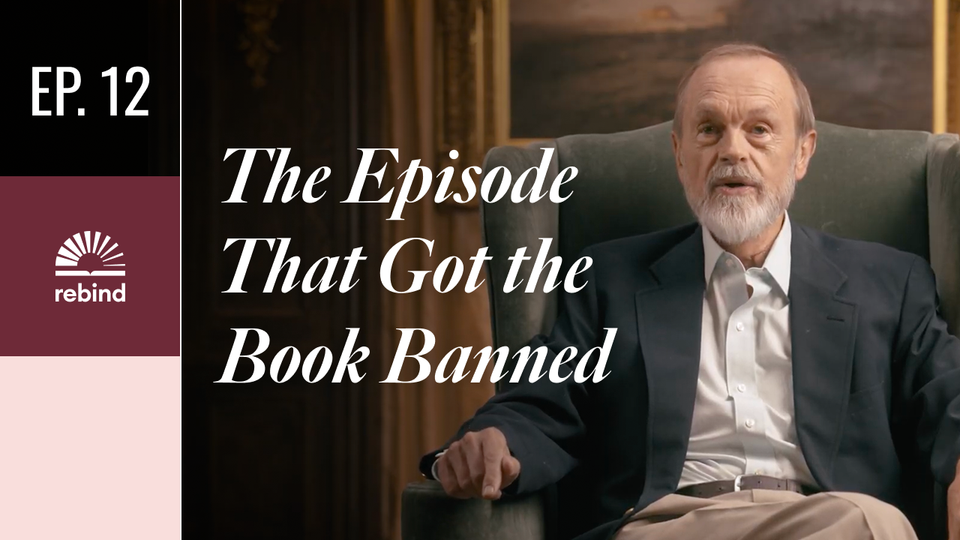
Film · Philip Kitcher on Ulysses

Members get every audio series, film and essay on Rebind

For years Ulysses could not be read in England or America, and Philip Kitcher opens with the reason: this episode. On Sandymount Strand, where Stephen Dedalus walked that morning, Gerty MacDowell sits with two friends and some small children, waiting for the fireworks. Watching her is Leopold Bloom. As the fireworks go up she leans back and lets him see, and Bloom has an orgasm. Then she hobbles away, and he sees that she is lame. Tame stuff by today's standards, Kitcher says, and yet this was the chapter that caused all the trouble.

The chapter splits in two. The first half is written as Gerty would write it, or as the fiction, the journalism and the ad copy she admires would, and it is punctuated by what Kitcher calls Gerty talk: sentences strung together on the word "because" that run on and on. He reads one of them aloud, a single sentence about wearing blue for luck, and fills in who Gerty is, a good-looking young woman of twenty-one or twenty-two, with an accident behind her and a young man who seems to have gone.

The second half is Bloom's. Kitcher follows his mixture of shame and pride, his decision not to go home to Molly yet but to call at the lying-in hospital instead, and the scrap of paper and the stick he writes with in the sand. In this last interior monologue, Kitcher argues, Bloom has turned back toward Molly and begun to think about repair.

Get the rest of this essay, and the whole library.

Membership

$90 a year

The rest of this essay, every episode of Philip Kitcher on Ulysses, and every audio series, film and essay on the site.

7-day money-back guarantee. Not ready? Join free. · Already a member? Sign in.

Read Deeper

O, I So Want to Be a Mother: The Man Who Gives Birth in Joyce and Shelley


Both novels put a man in labor. Philip Kitcher's Joyce makes him the book's tenderest wish; Charlotte Gordon's Shelley makes him its original sin.

Go deeper →

No Voltaire: Joyce's Priest, Voltaire's Pangloss, and Two Ways of Not Asking


Philip Kitcher calls the Jesuit who blesses a barge of turf a second Pangloss; Salman Rushdie's Voltaire fought Jesuits all his life. One drowned ship each.

Go deeper →

Why Is the Funeral in Ulysses So Funny? Comedy and Death in Joyce's Hades


Ulysses is funny on purpose, Kitcher argues: in Hades, comedy and death share a carriage, and laughter keeps Joyce's seriousness honest.

Go deeper →

The Interior Monologue: How Joyce Puts You Inside Stephen, Bloom, and Molly


The interior monologue is the engine of Ulysses, Kitcher argues: language attuned to each character, opening Stephen, Bloom, and Molly to the reader.

Go deeper →

The Dead and the Yes: Joyce's Two Endings in Mercy


For Banville and Kitcher, 'The Dead' and Molly's 'yes' are the same turn: Joyce ending both Dublin books in mercy, holding the living and the dead together.

Go deeper →

Dublin as a City of the Mind


Kitcher and Banville converge on Joyce's Dublin as a city of the mind: Banville's paralyzed Dubliners, and Kitcher's Bloom, the man who chose freedom.

Go deeper →

Antisemitism and Belonging in Ulysses: Whose Country Is It?


Kitcher names the antisemitism around Bloom and its engine, 'Boys' Club Morality': Dublin excludes its most decent man for the very virtues it lacks.

Go deeper →

Membership

Read the greatest books
with the people who know them best.

A library like this exists only if readers decide it should: a place where the greatest books ever written are explored, argued with, and kept alive. The people who join now make it possible. Your membership funds the next books, the next guides, the next conversations.

$90 for the year.

  • Every audio series, every film, every essay, and every book we add
  • Cancel any time, with a 7-day money-back guarantee
$90 / year
  • Every episode of every audio series
  • All films and all essays
  • Each new book the day it’s published
  • Cancel any time
Become a member

Not ready? Join free for the introductions, essays and Listen In clips.