
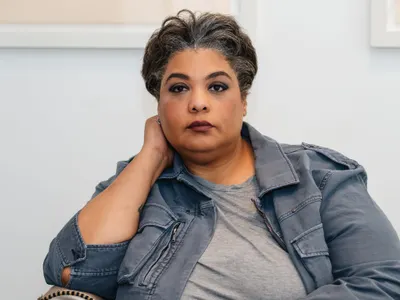
 Roxane Gay on Edith Wharton's Age of Innocence
Which Age of Innocence Should You Read? A Guide to the Editions
with commentary by Roxane Gay
If you want one answer: for a first read, the Penguin Classics or the Oxford World's Classics, either of which gives you the novel with light notes and a good introduction. For a second read, the Norton Critical Edition, edited by Candace Waid, or the Broadview, edited by Michael Nowlin. Both explain the New York of the 1870s that the novel assumes you know.
The Age of Innocence (1920) has one text worth caring about. Edith Wharton serialized it in Pictorial Review through the summer of 1920, revised it heavily for the book that Appleton published in October, and kept revising through the early printings. The Library of America and the Norton follow the book text with her final changes. Every serious edition does, and the differences a reader would notice are nil. What differs is how much of old New York the editors explain, and that is the whole question, because the novel is about that world's unwritten rules.
What Gay Says You're Up Against
Roxane Gay, whose Rebind series goes through the book in eight episodes, makes her case for it in Episode 1. It is about the sentences, and about what the plot withholds:
"I don't have a personal connection to the book, per se, other than that I just love reading it. I've read it probably 30 times now, and I find something new with each reading. And I still find myself as enamored by the sentences today as when I first read the book. Whenever that was, I can't even remember. And it just, as a writer, offers, I think, an incredible guide on how to write an incredible novel. How to write a great sentence, how to plot a story, how to give the reader almost everything they want, but not everything they want, which is one of the things that I teach the most to my students in both fiction and nonfiction."
Two things follow. If you're going to read it thirty times, buy a paperback with notes you can ignore. And a book built on withholding needs an edition that doesn't spoil it. The Norton's contexts are for the second read, after you know what the novel has withheld. Gay's reading of the ending, in Episode 8, is a good test of whether you're ready for them:
"But the ending is very interesting, and I think it's a lot more complicated than people give it credit for. On the one hand, we see that Newland was just this guy who thinks one thing of himself and then does another thing that disappoints himself in many ways. But at the end, I think, you know, we see again that Newland is very enamored with the idea of himself."
If you've read that paragraph and don't know what she means, read the novel first in a plain edition. Then come back for the apparatus.
Penguin Classics
Penguin's edition has Cynthia Griffin Wolff's introduction and notes by Laura Dluzynski Quinn, and the newer printings add a foreword by Elif Batuman. The notes are at the back and cover the opera, the families, the addresses, the money. It is the copy for a first read beside the series. Penguin also sells a Vitae hardback of the same text with an introduction by Sarah Blackwood, for a reader who wants the book to last the thirty readings.
Oxford World's Classics, Edited by Stephen Orgel
Stephen Orgel's Oxford edition (2006, reissued 2008) is the other first-read copy. It has an introduction by Orgel, a Shakespeare scholar, and explanatory notes at the back. Penguin or Oxford comes down to which introduction you'd rather read afterward.
Norton Critical Edition, Edited by Candace Waid
The Norton (2003) is the edition that explains old New York. Around the text it prints Wharton's letters about the novel, her memoir of a childhood in that world, and the Honoré de Balzac story she borrowed from. Then come the documents: newspaper coverage of the panic of 1873, a Ward McAllister interview, recipes for Roman punch, period writing on archery, divorce, and society. Then eleven reviews from 1920 and 1921 and nine modern essays, including one on the Martin Scorsese film. If Gay's episodes have made you want to know what the Beauforts' ballroom actually cost, or what the rules about divorce were, this is where it's laid out. It is twice the length of the novel.
Broadview, Edited by Michael Nowlin
The Broadview (2002) does the same job with a different selection. It has Wharton's outlines for the novel, her correspondence about it, and seven reviews including Edmund Wilson's. It adds writing on the status of women by Theodore Roosevelt, Emma Goldman, and Wharton herself, and a run of anthropological texts from Edward Tylor to Ruth Benedict, because the novel keeps describing New York society as a tribe with rites. For a reader who took Gay's point about the rules and wants to see where Wharton got her vocabulary for them, the Broadview is the one. The Norton has more on the money. The Broadview has more on the manners.
The Library of America, and the Rest
The Library of America volume of Wharton's novels, edited by R. W. B. Lewis, prints the book with her final revisions alongside The House of Mirth, The Reef, and The Custom of the Country, with almost no notes. It's the volume for someone who, like Gay, has decided Wharton is their writer. The Modern Library, Signet, Barnes & Noble, Everyman, Vintage, and Dover editions are all the complete text with varying introductions (Louis Auchincloss, Regina Barreca, Maureen Howard, Peter Washington, Lionel Shriver) and few or no notes. Any of them will do for a first read. None replaces the Norton or the Broadview for the second. The free text on Gutenberg is complete and has no notes.
Reading It with Gay
Gay's series goes through the novel in order across eight episodes, with the text read aloud between her commentary. She reads it as a writer teaching from it: what Wharton gives the reader, what she holds back, and why the ending is "a lot more complicated than people give it credit for." Start with the free introduction film. Then read Innocence Came Later, the essay that opens the series, and listen to Episode 1, On the Surface, a Love Story, whose first five minutes are free. The Penguin for the first read, the Norton or the Broadview for the second.