
 Philip Kitcher on James Joyce's Ulysses
Which Ulysses Should You Read? A Guide to the Editions
with commentary by Philip Kitcher
If you want one answer: for a first read, the Oxford World's Classics edition of the 1922 text, edited by Jeri Johnson. Its notes sit at the back, where they can't nag you. Hans Walter Gabler's "corrected text," the Vintage paperback most American readers buy, is the scholarly standard. The Cambridge Centenary Ulysses (2022) is the one with the help printed on the page. Philip Kitcher, whose Rebind series goes through all eighteen episodes, doesn't pick one. He has a rule about all of them, and it decides more than the choice of text does: "Always spend much more time with Joyce than with his commentators."
Ulysses (1922) has a tangled textual history. James Joyce wrote it with a typist and a French printer and corrected proofs by hand up to the last day. The first edition carried thousands of errors. Later editions corrected some and introduced others. Then the 1984 edition by Gabler, built from the manuscripts rather than the printed books, changed about five thousand readings and set off a public quarrel that lasted years. So the book you buy is one of two texts, the 1922 first edition or the Gabler reconstruction. For a first-time reader the difference matters less than the notes that come with it.
What Kitcher Says You're Up Against
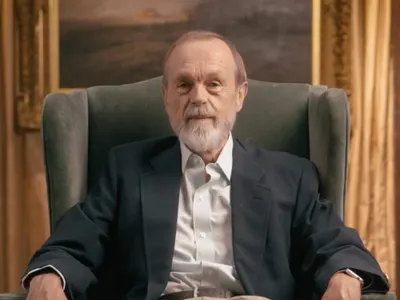
Kitcher first read the book at thirteen, from his school library, after devouring A Portrait of the Artist as a Young Man in an afternoon. The intro film has the story, including the sequel:
"Anyway, my school library had a copy, and I borrowed it, and I read it. Interestingly, though the school library did have a copy, when I wanted to get one as a prize some years later, that was refused. So I read Ulysses and knew that I had not understood very large parts of it. But the parts I had understood, or thought I'd understood, were so rich and so interesting that I've read it again and again and again throughout my life."
His first episode is a set of tips for the first-time reader, drawn from teaching Columbia's Joyce course. The one about editions is really about apparatus:
"Use commentaries, companions, and guidebooks judiciously. Many translations of Dante's Divine Comedy into English come with lots of valuable information piled up in pages of notes. If you could read and retain all that material, you would recognize more in the poem than almost anyone actually does. Dante alludes to many sources and mentions many characters about whom contemporary readers are understandably ignorant. Doing it piecemeal, doggedly flipping from poem to note and back at every point where your knowledge breaks down, is another disaster. You miss the music of Dante's poetry."
The same goes for Joyce. Two more of his tips go together. Don't read too fast, because "Joyce has selected his words very carefully." Don't read too slowly, because "Plodding is as unproductive as skimming." His last tip is the one to remember when an edition's notes make you feel stupid: "Don't nag yourself. . . . Almost every first-time reader gets lost." Which edition you want depends on how much help you want within reach, and how good you are at not reaching for it.
Oxford World's Classics, The 1922 Text, Edited by Jeri Johnson
Johnson's edition reprints the first edition's text as Joyce's readers first had it, with a long introduction, episode-by-episode schemata, and extensive notes at the back. It's the right first copy for exactly the reason Kitcher gives. The notes are there, but not on the page, so you have to decide to use them. The 1922 text is also what the Rebind narrator reads from, so the passages you hear in the series will match what's in front of you. Reissued in 2022 for the centenary.
Gabler's Corrected Text (Vintage)
Gabler's edition (1984; trade edition 1986) is the text most scholars cite and the one most American bookshops stock, as the Vintage paperback. It corrects the first edition's misprints and restores readings from Joyce's manuscripts. It also carries the line numbers that the big annotation volumes are keyed to. The quarrel over it, led by John Kidd in the New York Review of Books in 1988, was about whether a reconstruction from manuscripts can be called the book Joyce published. Random House reissued the 1961 text alongside it, and Modern Library still prints that one. For a first reading none of this matters. For a second, Gabler is the copy to annotate, because the annotators have.
The Cambridge Centenary Ulysses (2022)
Edited by Catherine Flynn, this is the 1922 text with the help printed in the margins: running notes, maps, and an introductory essay for each episode by a different Joyce scholar. It's for the reader who knows they'll want the notes in reach and would rather not flip. That is the use Kitcher warns against. It is also the one that gets many people through. Expensive and heavy, a desk book rather than a train book.
Penguin Modern Classics, and the Annotated Students' Edition
Penguin's standard Ulysses carries Declan Kiberd's introduction and the 1960 Bodley Head text, the one British readers grew up on, with no notes. Penguin's Annotated Students' Edition (1992) adds Kiberd's notes at the back and is the budget version of the Oxford. Sam Slote's edition for Alma Classics prints the 1922 text with some nine thousand endnotes, the most in a paperback. Any of these will do. The Oxford has the best introduction of the group.
The Companions
Three books sit beside the novel on most Joyceans' shelves. Harry Blamires's The New Bloomsday Book is a running paraphrase, page by page, for when you've lost the plot. Kitcher says everyone does, at three places: "episode 3, Proteus; episode 11, Sirens; and episode 14, Oxen of the Sun." Don Gifford's Ulysses Annotated (1988) was the standard reference for thirty years, keyed to Gabler. Its successor is Annotations to James Joyce's Ulysses (Oxford, 2022), by Sam Slote, Marc Mamigonian, and John Turner, some twelve thousand notes keyed to both texts. Buy the companions after the first reading, not before. Kitcher's series is itself a companion, and he says what it isn't: "What I've written doesn't pretend to be the definitive key to Ulysses. I doubt there is any such thing."
A Note on What to Avoid
The free editions. The text on Gutenberg and in the free Kindle "unabridged, annotated" listings is the 1922 first edition with its misprints intact and no real notes. It's the same text the Oxford prints, minus everything the Oxford adds. There is no abridged Ulysses worth reading, and no "modern English" one at all. What you can skip is inside the book, and Kitcher says so. On Oxen of the Sun, in Episode 29, he names "the temptation to give up, or perhaps simply to skip this episode," and then spends the episode showing what's in it.
Reading It with Kitcher
The series takes the novel episode by episode across forty-eight audio episodes, with the passages read aloud from the 1922 text. Kitcher's advice for the whole thing is in the intro film: "The great message for coming to Ulysses is relax. Enjoy it. On a first reading, there will be bits that you probably won't really fathom at all, but they get clearer and clearer and richer and richer the more times you read it." Joyce's own question to his readers, Kitcher says, was never whether they understood it. It was "Well, did you laugh?" Start with the free introduction film. Then read Well, I Tried Once, the essay that opens the series, and listen to Episode 1, Go On, and Faith Will Come to You, whose first five minutes are free. The title is d'Alembert's advice to students who doubted the calculus. "That's good advice about Ulysses too." The Oxford in your bag, Gabler on the shelf, and the companions closed until June is over.