
Video 6
Revolution, Violence And Justice
Featuring Margaret Atwood
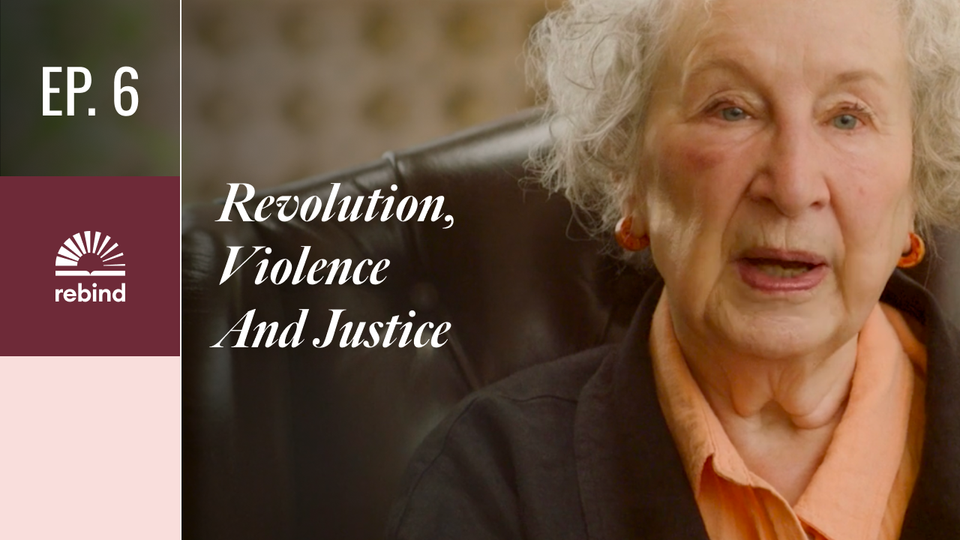
Film · Margaret Atwood on A Tale of Two Cities
Margaret Atwood starts with the guillotine. Why does Charles Dickens's A Tale of Two Cities spend so much time on it, and have so much fun with it, the national razor that cures headaches and keeps hair from turning gray? Her answer: he's repeating the jokes people actually made at the time, no sadism required, and he loves light and shade too much to skip the lamppost hangings. She also notes the trick of Darnay's cell, almost identical to Dr. Manette's, which lets Dickens mark time within the real dates of the Terror.
The turn is Dr. Manette's third transformation, into a figure of authority, Bastille survivor and doctor who takes no sides. Madame Defarge, meanwhile, has become truly monstrous: even children must be beheaded. Atwood flags Carton's sudden decision to give up drink, promises a Defarge versus Pross bout she calls worldwide wrestling at its finest, and asks you to keep the little seamstress in mind as the face of the 80 percent of the executed who weren't aristocrats.
Subscribe to continue reading