
Video 3
The Aristocracy, The Working People & The Poor
Featuring Margaret Atwood
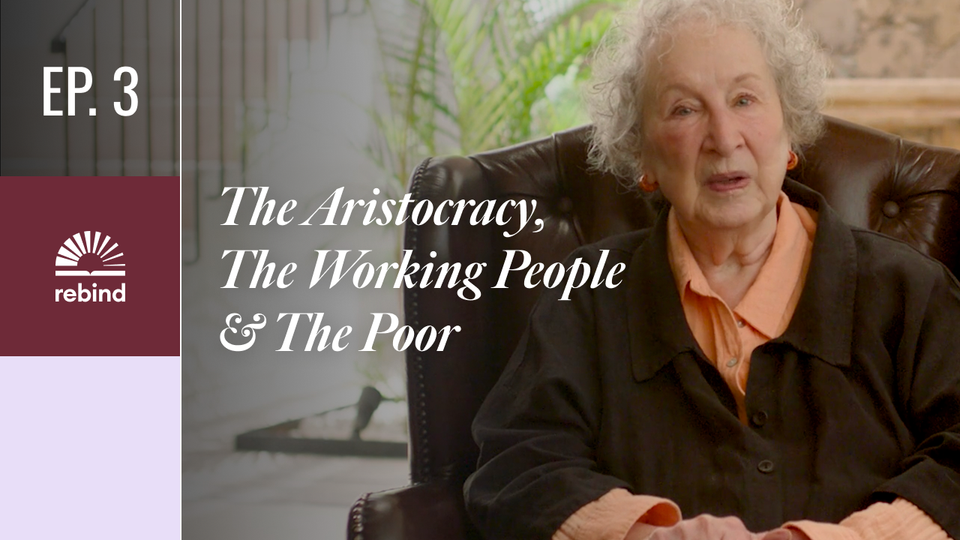
Film · Margaret Atwood on A Tale of Two Cities
The Marquis is dead in his bed with a note on the knife, and Margaret Atwood's verdict at this point in Charles Dickens's A Tale of Two Cities is that most readers will say good riddance, his excellent taste in furniture notwithstanding. She maps the pages ahead: the love triangle of Lucie, Darnay and Carton, the puffed-up lawyer Stryver as comic relief with a function, and Jarvis Lorry finding his own humanity in the Manette household.
The thing to slow down for is Chapter 14, a funeral that turns into a mob. Atwood reads it as funny, very dark, and Dickens's warning that the English aren't above the destruction about to happen in France. She also decodes the Jacquerie, the secret revolutionaries who work in cells and call each other Jacques, and closes on Madame Defarge, one tough cookie who has probably never fainted even once. You'll find out why she is always knitting.
Subscribe to continue reading