
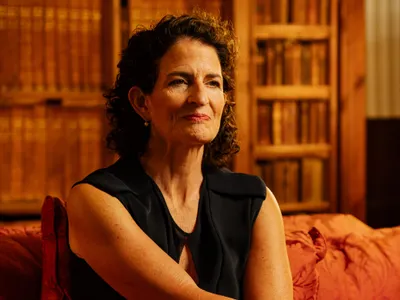
 Charlotte Gordon on Mary Shelley's Frankenstein
Which Frankenstein Should You Read? The 1818 Text, the 1831 Text, and the Editions Worth Owning
with commentary by Charlotte Gordon
If you want one answer: read the 1818 text, in the Penguin Classics edition with Charlotte Gordon's introduction. The Norton Critical Edition prints the same text with the criticism, and the Broadview puts the 1831 changes in an appendix so you can see them. Gordon, whose Rebind series goes through the novel chapter by chapter, is Mary Shelley's biographer and wrote that Penguin introduction. The first question any Frankenstein buyer faces, which text, is one she has already answered in print.
The question exists because there are two books called Frankenstein. Mary Shelley published the first anonymously in three volumes in 1818, when she was twenty. In 1831 she revised it for a cheap one-volume reprint and added an introduction telling the story of how it came to be written. She changed enough that scholars treat the two as separate texts. Most editions you'll find in a bookshop, and nearly every free one, print 1831 without saying so. Editions that print 1818 say so on the cover.
The Text Gordon Reads From
Gordon introduces herself in the first film with the fact that settles it:
"I wrote the Introduction to Penguin's new edition of the 1818 edition of Mary Shelley's Frankenstein, and I also wrote Mary Shelley: A Very Short Introduction. My dual biography of Mary Shelley and her mother, Mary Wollstonecraft, Romantic Outlaws, won the National Book Critics Award for biography."
The series reads the 1818 text too, so what the narrator reads and what Gordon has in her hand match. Her case for 1818 runs through the whole series. It begins with the most famous story about the book, the one Shelley told in the 1831 introduction: that the novel came to her in a waking dream. In Episode 1, Gordon says why she doesn't believe it:
"All of the people who were there, who were huge diary keepers, do not record that Mary had any trouble starting to write. And if you look at her notebooks, which are in the Bodleian, there's no evidence of stopping and starting or not knowing what to do. And so the sort of working theory that her biographers have is that she tells the story that 'Frankenstein came to me in a dream' many years after, in 1831, after everybody is dead except for Claire. And she tells it because she's been called monstrous for writing this book."
That is the frame for the whole editions question. The 1831 text is the one a chastened author produced thirteen years later, with a story attached to make the book less her fault. The 1818 text is the one the twenty-year-old wrote.
Penguin Classics, The 1818 Text, Introduction by Charlotte Gordon
Penguin issued this edition for the bicentennial in 2018. It has the 1818 text, Gordon's introduction, and editorial apparatus by Charles E. Robinson, the scholar who edited Shelley's manuscript notebooks. For a first read beside the series it is the obvious copy. Gordon remembers writing it. In Episode 6, on Justine's trial, she admits, "I can never remember Justine's name. I remember when I was writing the introduction to this, I was like, what is her name again?" That is the right amount of reverence for a minor character, and the right edition.
Penguin also still sells its older black-spine Frankenstein, edited by Maurice Hindle, which is the 1831 text. The two look alike on a shelf. Check the cover for "The 1818 Text."
Norton Critical Edition, Third Edition
The Norton, edited by J. Paul Hunter and now in its third edition (2021), prints the 1818 text with contexts, nineteenth-century responses, and a selection of modern criticism. If you want the arguments about the book, this is where they're gathered. The longest of them is about how much Percy Shelley contributed, and Gordon's position on that is in Episode 12:
"And we had the notebook that Mary would write her draft in and then hand to Percy. I picture it in bed. They had, like, a notebook on a writing desk, and she would write and then she would hand it to him. And you can see, in the different color ink and the handwriting, his emendations, which aren't always felicitous. They are not great at all. I think I was telling you this, that if there is a boring passage about the history of politics in Switzerland, it's written by Percy."
The notebooks are in the Bodleian. A century of rumor says Percy wrote the book, and Gordon's answer is to point at them: "Look and see. And you can see he added so much less than, say, Ezra Pound added to The Waste Land." Anyone can look. Charles Robinson's The Original Frankenstein (Vintage) prints Mary's draft with Percy's additions marked.
Broadview, Third Edition
The Broadview edition, edited by D. L. Macdonald and Kathleen Scherf, prints the 1818 text and puts the 1831 revisions in an appendix, along with contemporary reviews and related documents. It is the edition for a reader who wants to see what Shelley changed rather than be told. Gordon's verdict on the revision, from Episode 12, is one line: "And when she cuts out his stuff in the next version, it's great." Which Percy passages went, and what she added about fate, you can only judge with both texts in front of you.
Oxford World's Classics, and the Annotated Editions
The Oxford World's Classics edition, edited by Nick Groom, is also the 1818 text, with a full introduction and notes. It's the alternative to Penguin if you prefer Oxford's apparatus. Two annotated editions are worth knowing about for a second reading. The Annotated Frankenstein (Harvard, 2012), edited by Susan J. Wolfson and Ronald Levao, has running commentary and illustrations. The MIT Press edition (2017) is annotated "for scientists, engineers, and creators of all kinds" and reads the novel as a book about responsibility for what you make. Both use the 1818 text. Both are better after you've read the novel once on your own.
A Note on What to Avoid
Anything that doesn't say which text it is. The free editions on Kindle and Gutenberg are 1831. So are most mass-market paperbacks. They aren't bad books, but they aren't the one Gordon is reading, and the differences matter. Elizabeth's origins change, and Victor leans much harder on fate. Avoid anything marked retold, abridged, adapted, or "classic starts." Those trade the frame narrative and the Creature's own account for the plot. The chapters on the Orkneys, where Victor destroys the female creature, are the first thing an abridgement cuts. Episode 11 calls them "the hardest one to welcome you into," and that is the reason to keep them.
Reading It with Gordon
The series follows the novel's own shape: Walton's letters from the ice, Victor's story, the Creature's story inside it, and back out to Walton. Gordon reads it as a biographer, with the Shelleys' notebooks and letters at hand. The episodes are where to take the question of who wrote what, and why the 1831 Shelley wanted a dream to blame. Start with the free introduction film. Then read The Medium and the Monster, the essay that opens the series, and listen to Episode 1, The Lie About the Dream, whose first five minutes are free. The 1818 Penguin is the book she's holding. The Broadview will show you what the other one did to it.